
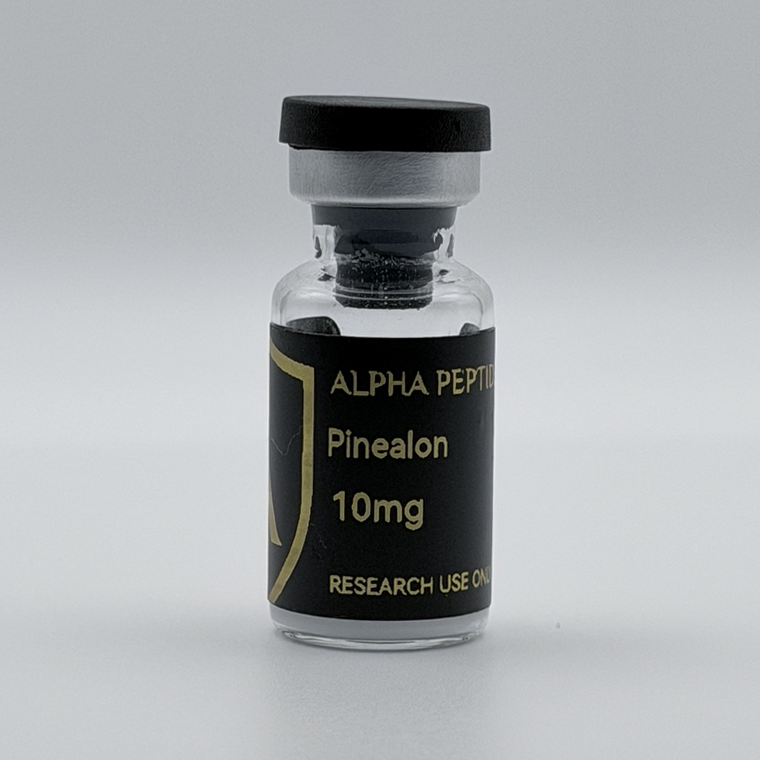
Pinealon is a synthetic tripeptide with the sequence glutamic acid–aspartic acid–arginine, written as Glu-Asp-Arg or EDR. Published experiments have investigated it in cellular stress and neuronal research models. The 2011 cell-study record describes its sequence and experimental activity.
Three amino acids give researchers a clearly defined molecule to investigate. The interesting part is asking precise questions about it: which cells were studied, what changed, and how was that change measured?
This guide introduces two selected preclinical studies and a practical way to read them. It is an introduction to the literature, rather than an exhaustive review.
Pinealon and EDR: understanding the name
In the Pinealon literature, EDR is the one-letter shorthand for Glu-Asp-Arg. Searching both names can help when locating papers. Record the full sequence when comparing materials or planning a literature search; a familiar name alone leaves room for ambiguity.
A useful reading note begins with the paper’s title, year, exact material and experimental model. That makes it easier to distinguish an original experiment from a later article discussing it.
What did the cell research investigate?
Khavinson and colleagues reported experiments involving cerebellar granule cells, neutrophils and PC12 cells under induced oxidative stress. They measured reactive oxygen species accumulation and cell death, and also examined ERK1/2 signalling and cell-cycle changes. The authors reported lower ROS accumulation and necrotic cell death under their experimental conditions. Read the 2011 study abstract.
The useful distinction is between the measured outcome and the explanation proposed for it. A change in a laboratory readout can support a hypothesis, while further experiments are needed to establish the mechanism.
What did the animal study add?
A 2012 study investigated rat offspring in a model of prenatal hyperhomocysteinaemia, meaning experimentally elevated homocysteine during pregnancy. The researchers assessed spatial learning and examined isolated cerebellar neurons. They reported differences in behavioural measures, ROS accumulation and necrotic cells in the Pinealon-associated group. Read the original rat study.
This was a specific experimental model with a particular developmental context. It does not establish an effect in every neuronal system, and it cannot be treated as a clinical outcome. Keeping the model beside the result is essential when summarising the paper.
Four questions to ask when reading a Pinealon paper
- What was tested? Record the peptide identity and the material information supplied by the authors.
- What was the model? Separate cultured cells, isolated tissue and animal experiments in your notes.
- What was actually measured? Distinguish a biochemical readout from cell survival or a behavioural result.
- What supports the conclusion? Look for appropriate controls, replication and a clear link between the data and the authors’ interpretation.
These questions make a literature search more useful than a collection of promising headlines. Keep a separate column for unanswered questions: uncertainty is part of the research record.
Frequently asked questions
Is EDR another name for Pinealon?
Yes, in the papers discussed here. EDR refers to the Glu-Asp-Arg sequence. Include “Pinealon” as well when searching, because short abbreviations can also appear in unrelated literature.
Do these studies establish human benefits?
No. The selected papers concern cell and animal experiments. Their findings should be described within those models; they do not establish human safety or clinical efficacy.
Where should a laboratory check product information?
Start with the Pinealon 10mg listing for the current product specification and documentation links. For questions about the material, contact Alpha Peptides® before making assumptions.
Continue your research
Use our guide to reading a certificate of analysis alongside product documentation, or explore the Research Library for related laboratory guides.
Alpha Peptides® products are supplied strictly for in vitro and laboratory research. They are not for human consumption or veterinary use. This article provides research-literature context and no administration advice.