
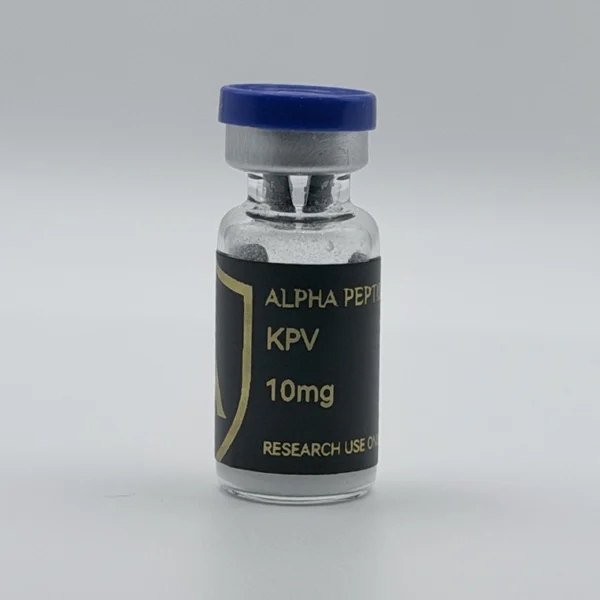
KPV animal research includes experiments on intestinal inflammation and the biological conditions that may influence its effects. The useful question is precise: what happened in each mouse model, and how far does that finding reach?
This article compares three selected primary papers. Their models and endpoints differ, so they should be read individually before drawing a broader interpretation.
What is KPV?
KPV is a three-amino-acid peptide, lysine–proline–valine. Dalmasso and colleagues investigated its uptake through PepT1, a peptide transporter, and its relationship with inflammatory signalling. [1] For the introductory compound background, see What is KPV?
The studies at a glance
| Paper | Mouse model | Main question |
|---|---|---|
| Dalmasso et al., 2008 [1] | DSS and TNBS colitis | KPV, transporter uptake and intestinal inflammation |
| Kannengiesser et al., 2008 [2] | DSS and CD45RBhi transfer colitis | Inflammation and the role of melanocortin signalling |
| Viennois et al., 2016 [3] | AOM/DSS colitis-associated tumour model | Whether KPV effects depend on PepT1 |
2008: intestinal inflammation and PepT1
Dalmasso and colleagues combined cell experiments with mouse colitis studies. They reported reduced intestinal inflammation following KPV exposure in the animal models. In the DSS experiments, tissue examination showed less inflammatory damage; changes in colon weight and length were also reduced. [1]
The cytokine measurements deserve care. Several inflammatory messenger RNA measurements decreased, but the reported statistically significant reductions in that analysis were for IL-6 and IL-12. “Every inflammatory marker was significantly reduced” would overstate this result. [1]
This illustrates why the individual measurement matters. A paper can contain evidence pointing in a similar direction across several outcomes without every comparison meeting its statistical threshold.
2008: a second group and different comparisons
Kannengiesser and colleagues studied DSS colitis and an immune-cell transfer model. They assessed body weight, colon histology and myeloperoxidase (MPO) activity, an inflammation-related measurement. [2]
In the DSS model, KPV-treated mice recovered earlier, regained more body weight and showed reduced inflammatory infiltration and colonic MPO activity. The transfer model also showed recovery, weight regain and reduced histological inflammation. [2]
The authors additionally examined mice with a nonfunctional melanocortin-1 receptor. They interpreted their results as suggesting that KPV’s effects were at least partly independent of that receptor’s signalling. [2]
This is a separate research contribution, but it is not an identical replication of the first paper. Shared terminology such as “colitis” should not obscure differences between experimental systems.
2016: testing the PepT1 dependency
Viennois and colleagues used an AOM/DSS model of colitis-associated tumour development, including mice lacking PepT1. KPV reduced tumourigenesis in wild-type mice but did not show that inhibitory effect in PepT1-knockout mice. [3]
The knockout comparison matters because it tests a proposed biological dependency. The authors’ Figure 8 reports five mice per group for that particular experiment; this is not the sample size for every analysis in the paper. [3]
The result belongs to an experimentally induced mouse model. It cannot establish that KPV prevents or treats human colorectal cancer. Its value here is the mechanistic boundary: the response was not reproduced when the transporter was absent.
How should these findings be compared?
For the wider framework, read Understanding Peptide Research: Cell Studies, Animal Models and Human Trials.
The papers examine related questions through different designs. Combining their positive observations into one general “gut healing” claim would lose the distinction between inflammation measurements, tissue appearance, recovery and tumour outcomes.
Keep a short evidence record for each experiment:
- Population: species, strain, sex and any genetic modification.
- Model: how the experimental condition was established.
- Intervention: the exact substance, formulation, route and timing reported.
- Outcome: what was measured and when, including unchanged results.
- Uncertainty: group sizes, variability, exclusions and analytical methods.
ARRIVE provides a reporting framework for animal studies, including randomisation and blinding. When these details are not available in the material reviewed, their absence from an abstract should not be mistaken for proof that the researchers omitted them. [4]
Questions readers often ask
Does mouse colitis research establish a benefit in people?
No. A human treatment claim needs relevant human evidence. These selected animal studies can inform research questions; they cannot answer a clinical efficacy question on their own.
Can one mechanism explain every reported result?
A mechanism should be evaluated within the experiment that tests it. A transporter result and a receptor result concern different biological components; they should not be treated as interchangeable explanations.
Do these studies establish a human dose?
They do not establish a validated human dosing regimen. This review therefore does not convert animal exposures into instructions for human use.
Can the findings validate a peptide blend?
An experiment on KPV does not test a blend merely because the blend includes KPV. Composition, formulation and exposure are part of the question a separate study would need to address.
Continue with the Research Library or the KPV research overview.
Review scope: a focused comparison of three selected papers, not a systematic review. Source access included published abstracts, indexed results from the 2008 transporter paper, and selected methods, results and figure legends in an author-hosted proof of the 2016 paper. Complete final-version methods were not reviewed for every study; no formal risk-of-bias rating is assigned.
References
- Dalmasso G et al. (2008). PepT1-mediated KPV uptake and intestinal inflammation. Gastroenterology, 134(1), 166–178. DOI: 10.1053/j.gastro.2007.10.026 · PubMed.
- Kannengiesser K et al. (2008). KPV in mouse models of intestinal inflammation. Inflammatory Bowel Diseases, 14(3), 324–331. DOI: 10.1002/ibd.20334 · PubMed.
- Viennois E et al. (2016). PepT1 and KPV in colitis-associated tumour development. Cellular and Molecular Gastroenterology and Hepatology, 2(3), 340–357. DOI: 10.1016/j.jcmgh.2016.01.006 · PubMed.
- NC3Rs. ARRIVE guidelines 2.0.